
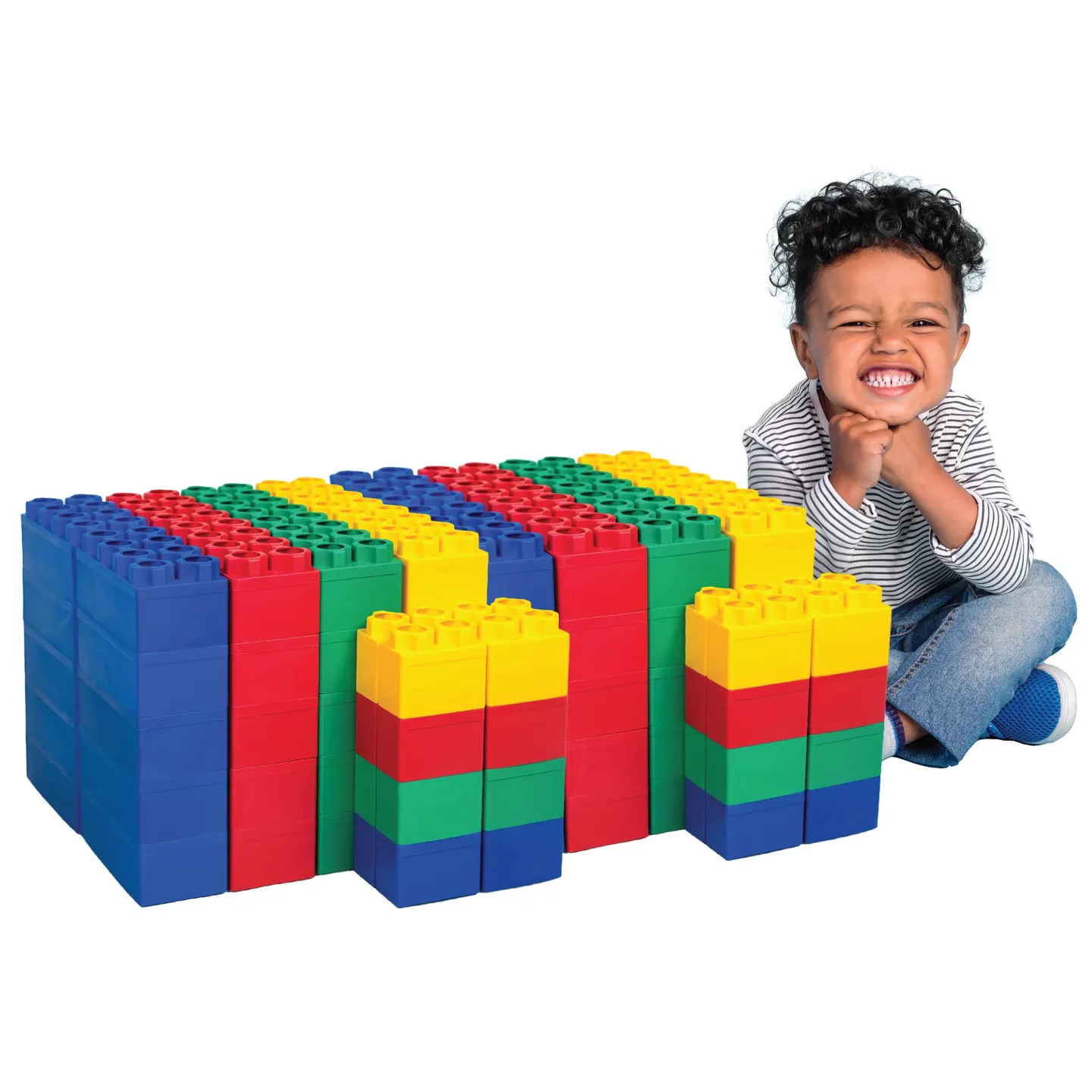
Giant Building Blocks are an excellent choice for children who enjoy building, designing, and exploring their imagination indoors. Giant Building Blocks can transform a playroom, classroom, or daycare into a creative construction zone where children can create towers, houses, tunnels, and imaginative structures. With their large size and easy-to-handle design, Giant Building Blocks encourage active play while supporting important developmental skills. For families looking for engaging indoor activities, Giant Building Blocks provide a simple way to combine creativity, learning, movement, and fun.
Why Giant Building Blocks Are Ideal for Indoor Play
Indoor play is important for children, especially when weather conditions make outdoor activities difficult. Giant Building Blocks give children an opportunity to stay active without requiring a large collection of complicated toys. Their oversized design allows children to work with their hands, move pieces around, and construct different shapes.
Unlike small construction pieces, these large building blocks are easier for young children to grip and arrange. They can also be used on floors, carpets, play mats, and other suitable indoor surfaces. This versatility makes them useful for bedrooms, playrooms, preschools, libraries, and childcare environments. For more information about large building blocks for kids, explore their features, benefits, age suitability, and role in encouraging imaginative and educational play.
Encouraging Imagination and Creativity
One of the biggest advantages of Giant Building Blocks is their ability to support open-ended play. There is no single correct way to use them. A child can build a castle one day, a garage the next, and a pretend shop later.
This freedom encourages children to think creatively and develop their own ideas. Open-ended construction play also allows children to experiment with different structures, sizes, and layouts. Instead of simply following instructions, they can become designers and builders.
Developmental Benefits of Large Building Blocks
Construction toys can contribute to several areas of childhood development. Giant Building Blocks encourage children to combine physical movement with problem-solving and imaginative thinking.
Fine Motor Skills
Picking up, carrying, positioning, and stacking large blocks requires coordination between the hands and eyes. Children learn how to control their movements while deciding where each piece should go.
Although the blocks are large, they still provide valuable opportunities for developing hand coordination. Children can practice placing pieces carefully, adjusting positions, and connecting different parts of their creations.
Problem-Solving Skills
Building a stable tower is not always easy. Children quickly discover that some arrangements work better than others. If a structure falls, they can try again and change the design.
This process teaches basic problem-solving skills. Children begin to understand concepts such as balance, stability, size, weight, and spatial relationships through practical play.
Social and Communication Skills
Giant Building Blocks can also turn individual play into a collaborative activity. Two or more children can work together to create a larger structure.
Group construction encourages children to communicate, share pieces, make decisions, and solve disagreements. These experiences can help develop teamwork and social confidence.
Creating a Creative Indoor Construction Area
A dedicated building space can make construction play even more enjoyable. Parents and educators can create a simple area with enough open floor space for children to move safely around their structures.
Giant Building Blocks should be stored somewhere that children can easily access them when supervised. A low storage box, open shelf, or dedicated toy container can keep the pieces organized while making cleanup easier.
Choosing the Right Play Surface
A comfortable and stable surface is important for indoor construction activities. Carpets, foam play mats, and other suitable flooring can provide a convenient area for building.
The available space should also be large enough for children to walk around their creations. Keeping fragile objects and unnecessary furniture away from the construction zone can help create a more suitable play environment.
Different Ways to Use Giant Building Blocks
The versatility of Giant Building Blocks means children can enjoy many different activities with the same set. Parents can introduce simple challenges to keep construction play fresh and interesting.
Build a Tower
Ask children to create the tallest stable tower they can make. They can experiment with different bases and stacking patterns.
Create a Pretend House
Children can arrange blocks to represent walls, doors, windows, or rooms. This activity combines construction with pretend play and storytelling.
Make a Tunnel
A tunnel can become part of an imaginative indoor adventure. Children can create pathways for toys or design a pretend transportation station.
Build a Vehicle
Children can use construction pieces to create imaginary cars, buses, trucks, or other vehicles. This encourages them to think about shapes and how different components might fit together.
How Giant Building Blocks Support STEM Learning
Construction play can introduce children to basic STEM concepts without making learning feel like a formal lesson. Giant Building Blocks encourage experimentation with geometry, balance, measurement, and spatial reasoning.
For example, children may discover that a wider base can make a tower more stable. They may also compare which structures are taller, wider, or stronger. Adults can ask questions such as, “What happens if you move this block?” or “How can we make the tower stronger?”
These simple questions encourage observation and logical thinking while keeping the activity enjoyable.
Introducing Shapes and Spatial Awareness
Large construction pieces can help children recognize basic shapes and understand how objects relate to one another. Stacking, arranging, rotating, and repositioning pieces gives children practical experience with spatial relationships.
This type of hands-on learning can complement early mathematics and science concepts introduced at home or school.
Safety Considerations for Indoor Construction Play
Safety should always be considered when selecting and using Giant Building Blocks. Choose blocks that are appropriate for the child's age and follow the manufacturer's recommendations.
Parents and caregivers should inspect blocks regularly for cracks, broken sections, sharp edges, or other damage. Children should also have enough space to build without standing on unstable structures or climbing excessively high towers.
Supervision is particularly important for younger children. The play area should be free from hazards, and children should be taught to carry and place large pieces carefully.
Making Indoor Play More Engaging
Giant Building Blocks become even more exciting when combined with storytelling and themed activities. Parents can create simple challenges such as building a zoo, designing a space station, or constructing a city.
Adding toy figures, vehicles, books, or safe decorative materials can expand the possibilities. Children can create stories around their structures, giving construction play a stronger imaginative element.
Rotating Building Challenges
A different challenge each week can prevent children from becoming bored. One week could focus on towers, while another could involve bridges, houses, roads, or animal shelters.
Adults can also encourage children to explain what they built. Asking them to describe their structure helps develop vocabulary, communication, and storytelling abilities.
Why Oversized Construction Toys Remain Popular
The popularity of Giant Building Blocks comes from their combination of simplicity and versatility. Children do not need complicated instructions to begin playing. They can immediately pick up pieces and start creating.
Giant Building Blocks also encourage physical movement compared with many stationary toys. Children bend, reach, carry, stack, and rearrange pieces as they build. At the same time, the open-ended format means the toy can continue to provide new experiences as children's creativity develops.
For parents, teachers, and childcare providers, Giant Building Blocks offer an adaptable activity that can support independent play, cooperative projects, and educational challenges.
Choosing Giant Building Blocks for Your Needs
When selecting a set, consider the child's age, available indoor space, block material, piece size, construction style, and storage requirements. Soft or lightweight materials may be preferable for certain indoor environments, while durable designs can be useful for classrooms and childcare settings.
The number of pieces is another important consideration. A small set may work well for one child, while larger groups may benefit from a more extensive collection.
It is also useful to consider whether the blocks can support different types of structures. A versatile set can provide more opportunities for creative construction and imaginative play over time.
Frequently Asked Questions
1. What are Giant Building Blocks?
Giant Building Blocks are oversized construction pieces designed for children to stack, arrange, connect, and use in imaginative structures. They are commonly used for indoor creative play and early construction activities.
2. What skills do Giant Building Blocks develop?
They can support creativity, coordination, spatial awareness, problem-solving, communication, teamwork, and early STEM concepts through hands-on construction activities.
3. Are Giant Building Blocks suitable for indoor play?
Yes. They are particularly useful for indoor play when there is enough clear floor space. Always select age-appropriate blocks and follow recommended safety guidelines.
4. Can children play with Giant Building Blocks together?
Absolutely. Collaborative building allows children to practice sharing, communication, planning, cooperation, and teamwork while creating larger structures together.
5. How can parents make building activities more interesting?
Parents can introduce themed challenges such as building a castle, city, bridge, garage, or animal shelter. Storytelling, toy figures, and imaginative scenarios can also make construction activities more engaging.
Conclusion
Giant Building Blocks offer a flexible and creative way to make indoor play more active, educational, and enjoyable. From developing fine motor coordination and spatial awareness to encouraging teamwork and imaginative storytelling, these oversized construction toys provide benefits beyond simple entertainment. With the right play space, age-appropriate materials, and creative challenges, children can continually discover new ways to build, experiment, and learn. For families, schools, and childcare environments seeking a versatile indoor activity, Giant Building Blocks can become a valuable part of a child's everyday play experience.